Option
|
Description
|
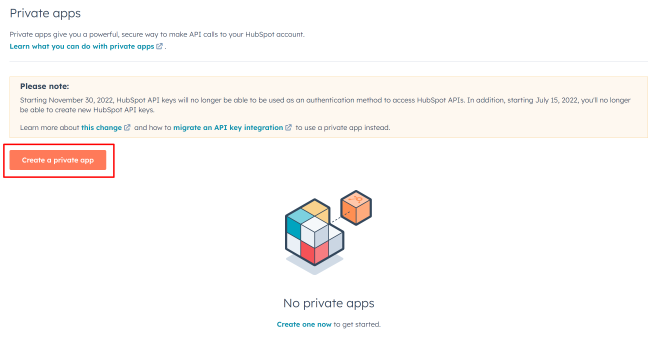
Access Token
|
Specifies the Private App access token. Available when the Private App authentication type is selected.
|
API Key
|
Specifies your HubSpot API key for APIKey authentication.
|
Associations
|
Determines whether to retrieve associations between HubSpot objects.
|
Authentication Type
|
Determines the authentication type to use. APIKey authentication, where you need to specify the HubSpot API Key, or RefreshToken - OAuth 2.0 authentication.
|
Client Id
|
Specifies the client ID of your app, created in a HubSpot Developer account. Used for RefreshToken authentication. Use the Web Login button in the main Connection Editor window to fill this parameter automatically. Or see HubSpot documentation on how to get value for this parameter.
|
Client Secret
|
Specifies the client secret of your app, created in a HubSpot Developer account. Used for RefreshToken authentication. Use the Web Login button in the main Connection Editor window to fill this parameter automatically. Or see HubSpot documentation on how to get value for this parameter.
|
Column Chunking
|
Determines whether to split long lists of requested columns into multiple chunks to avoid exceeding HubSpot API request limits.
|
Connection Lifetime
|
Specifies the time span (in seconds), compared against a connection's creation time when it is returned to the pool; the connection is destroyed if this span is exceeded. The default value is 0 (connection always returns to pool).
|
Connection Timeout
|
Specifies the length of time (in seconds) to wait for a connection to the server before terminating the attempt and generating an error. The default value is 60.
|
Default Command Timeout
|
Specifies the time in seconds to wait while trying to execute a command before terminating the attempt and generating an error.
|
Failover Retries
|
Specifies the number of retry attempts to automatically re-run a command before displaying an error message in case when the command failed because of an error that may be temporary.
|
Initialization Command
|
Specifies a command to execute after establishing the connection.
|
Local SQL Engine
|
Determines whether to use local SQL engine for SELECT queries, that are too complex to translate them directly to HubSpot API calls or to show an error message.
|
Max Pool Size
|
Specifies the maximum number of connections allowed in the pool. Setting the Max Pool Size value in the connection string can affect performance. The default value is 100.
|
Min Pool Size
|
Specifies the minimum number of connections allowed in the pool. The default value is 0.
|
NormalizeDbNames
|
Determines whether database object names are normalized when retrieved from the database.
|
Persist Security Info
|
Indicates if security-sensitive information, such as the password, is not returned as part of the connection if the connection is open or has ever been in an open state.
|
Pooling
|
Draws the connection from the appropriate pool, or creates and adds it to the appropriate pool, when set to true. This is the default behavior.
|
Proxy Host
|
Specifies the host name or IP address of the proxy server.
|
Proxy Password
|
Specifies the password for the proxy server account.
|
Proxy Port
|
Specifies the port number of the proxy server. The default value is 3128.
|
Proxy User
|
Specifies the proxy server account name.
|
Readonly
|
Indicates whether the connection is read-only (allows only SELECT statements).
|
Refresh Token
|
Specifies an OAuth 2.0 refresh token for HubSpot. Used for RefreshToken authentication. It is automatically generated when you perform Web Login.
|
Run Once Command
|
Specifies a command to execute after establishing the connection. Unlike Initialization Command, it is not executed for connections obtained from the connection pool.
|
Token Server
|
Is not used for HubSpot.
|
Use Custom Objects
|
Determines whether to allow working with HubSpot custom objects.
|
Use Sensitive Data
|
Determines whether to allow retrieving sensitive data fields from HubSpot.
|
UTC Dates
|
Converts dates to UTC format during import when set to True; the date values entered in Excel are then considered UTC dates when saving them to the data source.
|
 Connection Dialog